
Budgett’s Frogs
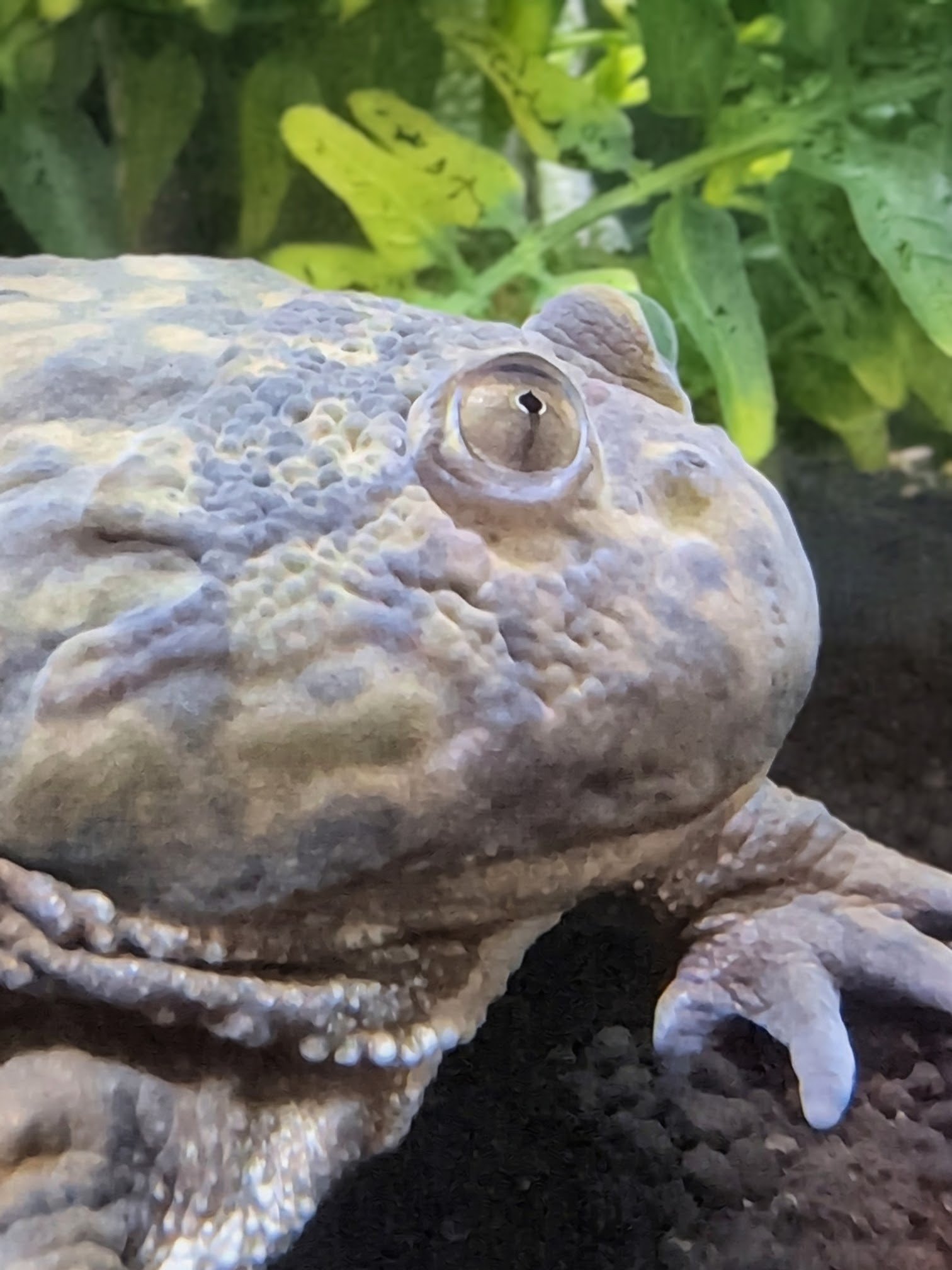
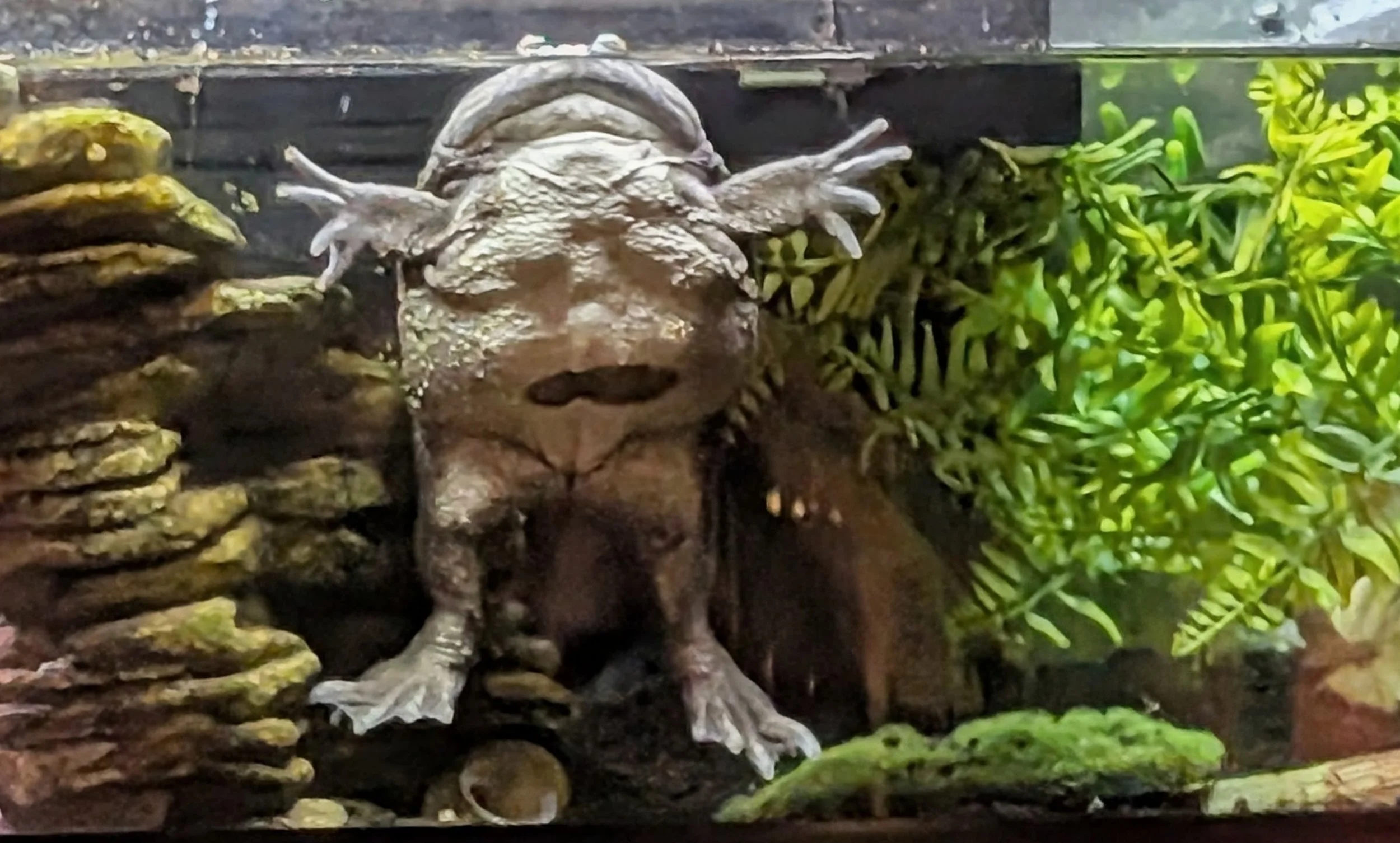
(Lepidobatrachus laevis) are some of the most unusual and charismatic amphibians out there.
General Overview
Scientific name: Lepidobatrachus laevis
Common names: Budgett’s frog, Paraguay horned frog, hippo frog
Native range: Paraguay, Argentina, Bolivia
Lifespan: Around 7–10 years in captivity (sometimes longer)
Size: 4–5 inches long, but with very wide, flattened bodies
Appearance
Flattened, broad head that makes up about half of their body length
Wide, comical grin with tiny sharp teeth
Short, stubby legs adapted for lunging and grabbing prey rather than hopping
Skin color is usually olive-green to brown, often with darker mottling for camouflage
Behavior & Natural History
Aquatic lifestyle: They spend much of their time in shallow, stagnant pools or slow-moving water.
Sit-and-wait predators: Like Pacman frogs, they are ambush hunters—waiting motionless until prey comes near.
Diet: Opportunistic feeders that eat insects, worms, fish, smaller frogs, and even their own kind.
Defense: If threatened, they make a loud squeak and inflate their bodies. They also bite and hold on tightly.
Estivation: In the dry season, they burrow into mud and form a protective cocoon, waiting for rain to return.
Captive Care Highlights
Enclosure: A semi-aquatic setup works best—half water, half land area with easy access between.
Temperature: 75–80°F with slightly cooler nights.
Humidity: High, since they are aquatic frogs.
Feeding: Mostly insects and worms; occasional fish or amphibian-safe protein. They are aggressive feeders and will try to swallow prey nearly as large as themselves.
Handling: Best avoided—like Pacman frogs, their skin is sensitive, and they can bite.
Conservation & Fun Facts
Not currently endangered, but populations depend on wetland habitats that are vulnerable to climate change and human activity.
Their tadpoles are unusual—they are predatory from the start, feeding on other tadpoles.
Because of their strange appearance and behaviors, they’re a favorite among exotic amphibian enthusiasts.