Mission golden-eyed tree frog
Amazon Milk Frog
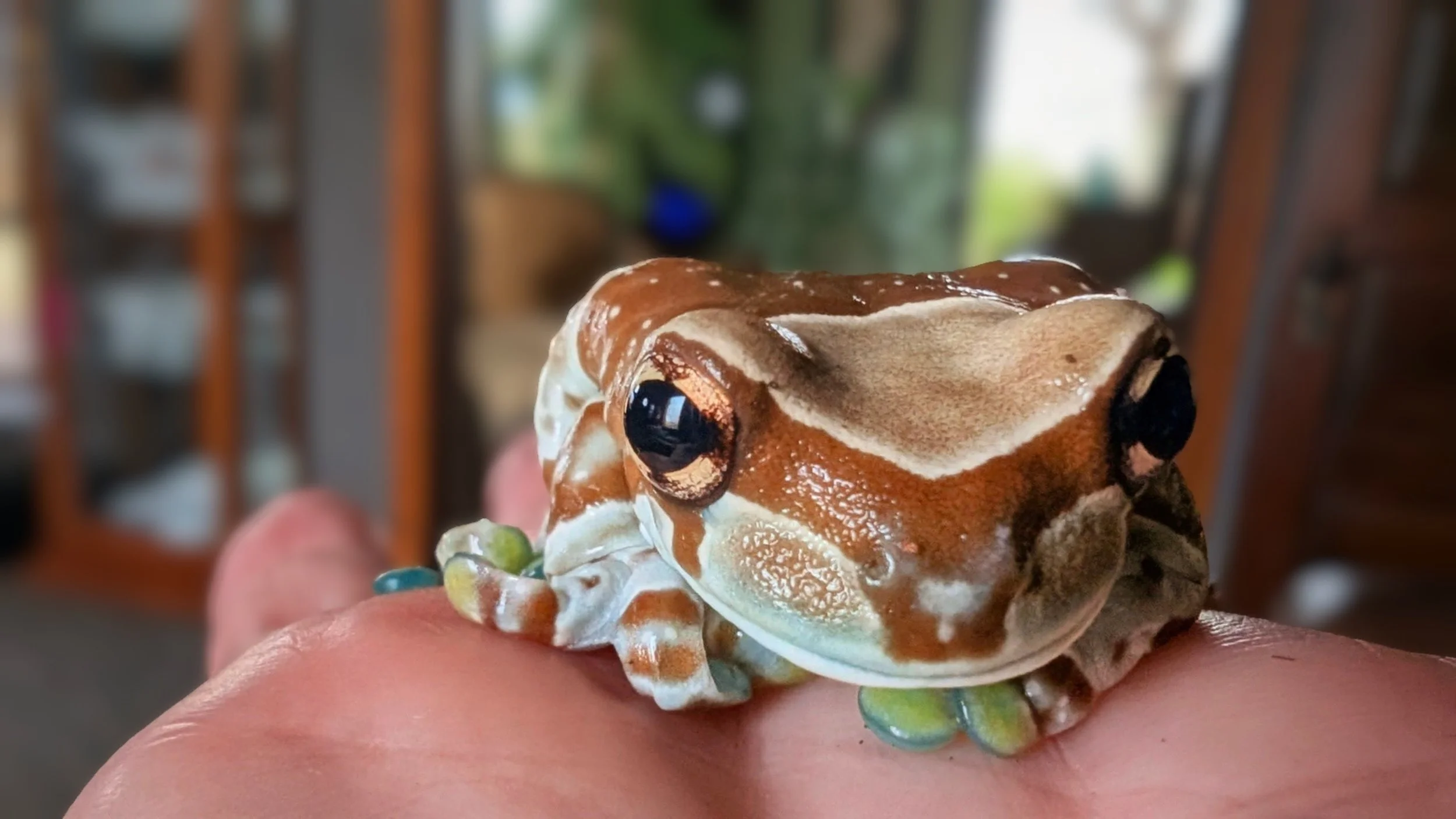
It’s a large, beautiful tree frog from the Amazon rainforest known for its striking gold eyes and blue-gray body with dark bands.
Basic Facts
Scientific name: Trachycephalus resinifictrix
Common names: Mission golden-eyed tree frog, Amazon milk frog
Size: about 2.5–4 inches (6–10 cm)
Range: Amazon Basin in Brazil, Colombia, Peru, Ecuador, and Bolivia
Habitat: tropical rainforest canopy near water
Why They’re Called “Milk Frogs”
When stressed, these frogs can secrete a milky white toxin from their skin.
This sticky secretion:
Helps deter predators
Can irritate the skin or eyes of animals trying to eat them
That’s where the name “milk frog” comes from.
Appearance
Mission golden-eyed tree frogs are easy to recognize because they have:
Large metallic golden eyes
Bluish-gray or pale blue skin
Dark brown or black bands and spots
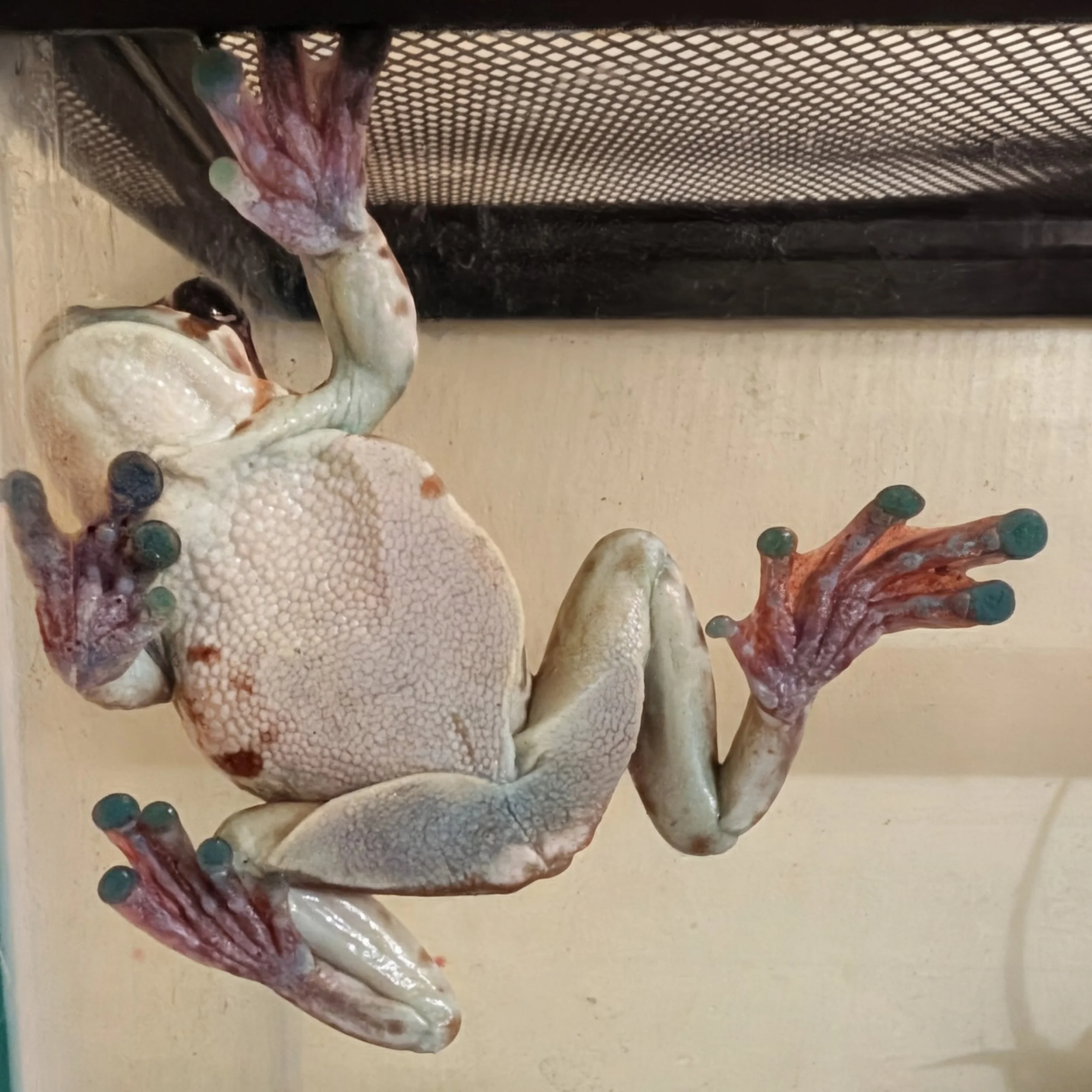
Very large toe pads for climbing
Their skin is also slightly bumpy, unlike the smooth skin of many tree frogs.
Behavior
Nocturnal – active at night
Arboreal – spend most of their lives in trees
Strong climbers thanks to large sticky toe pads
During the day they often hide inside tree holes or bromeliads
Reproduction
Their breeding strategy is really interesting.
Adults gather at water-filled tree holes or pools after rain.
Eggs are laid in the water inside the tree cavity.
Tadpoles grow in these small pools until they become frogs.
This keeps them high in the trees and away from many predators.
Fun Facts
🐸 They’re one of the larger tree frogs kept in captivity, which makes them popular in educational programs.
🐸 Tadpoles sometimes compete for limited food in tree holes, so only the strongest may survive.
🐸 Their gold eyes have horizontal pupils, which helps them see well in low light.
Why They’re Great for Education
Mission golden-eyed tree frogs are excellent ambassadors because they show:
Arboreal rainforest adaptations
Chemical defenses
Unique breeding in tree holes
The importance of rainforest habitats