Red-eyed Tree Frog
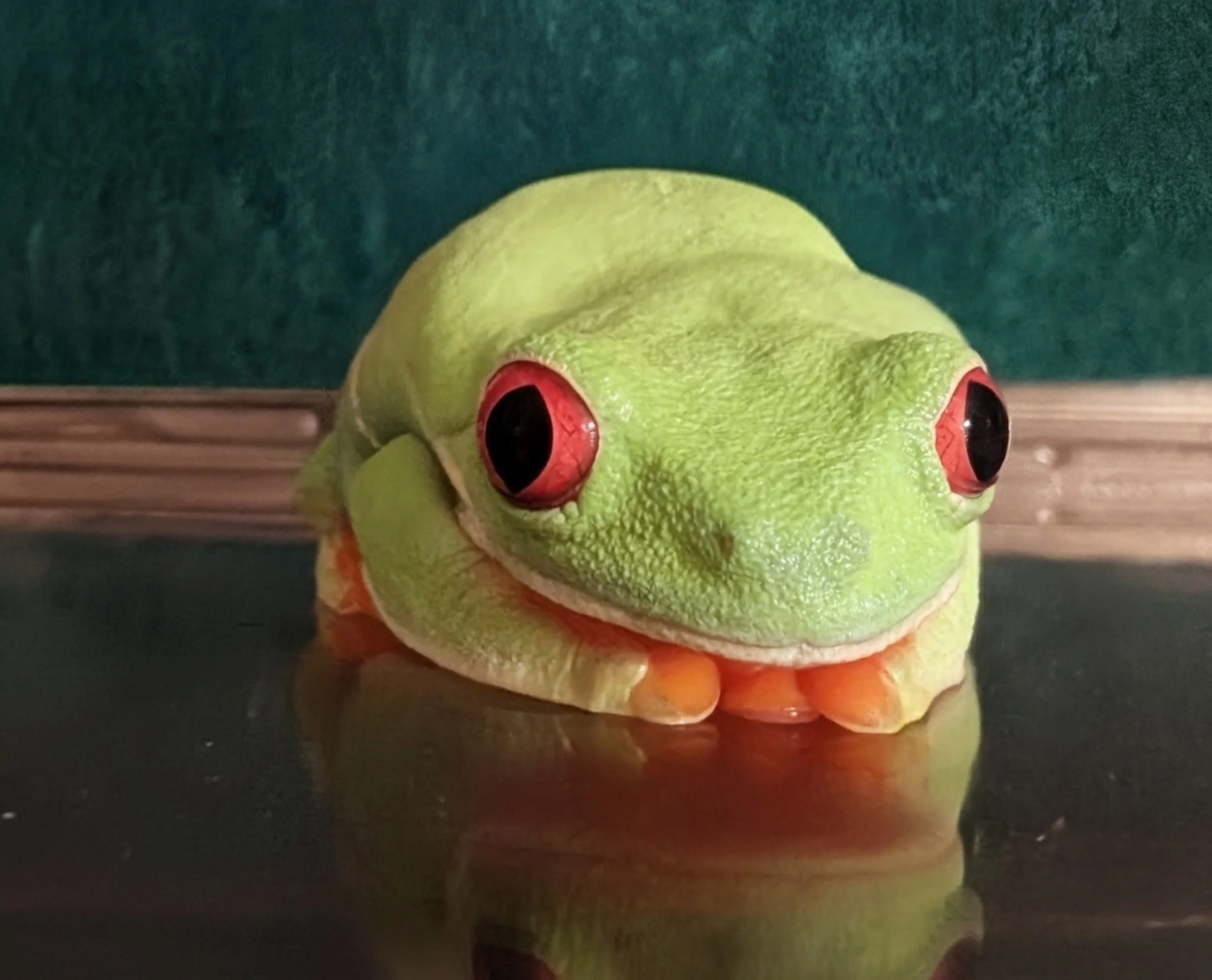
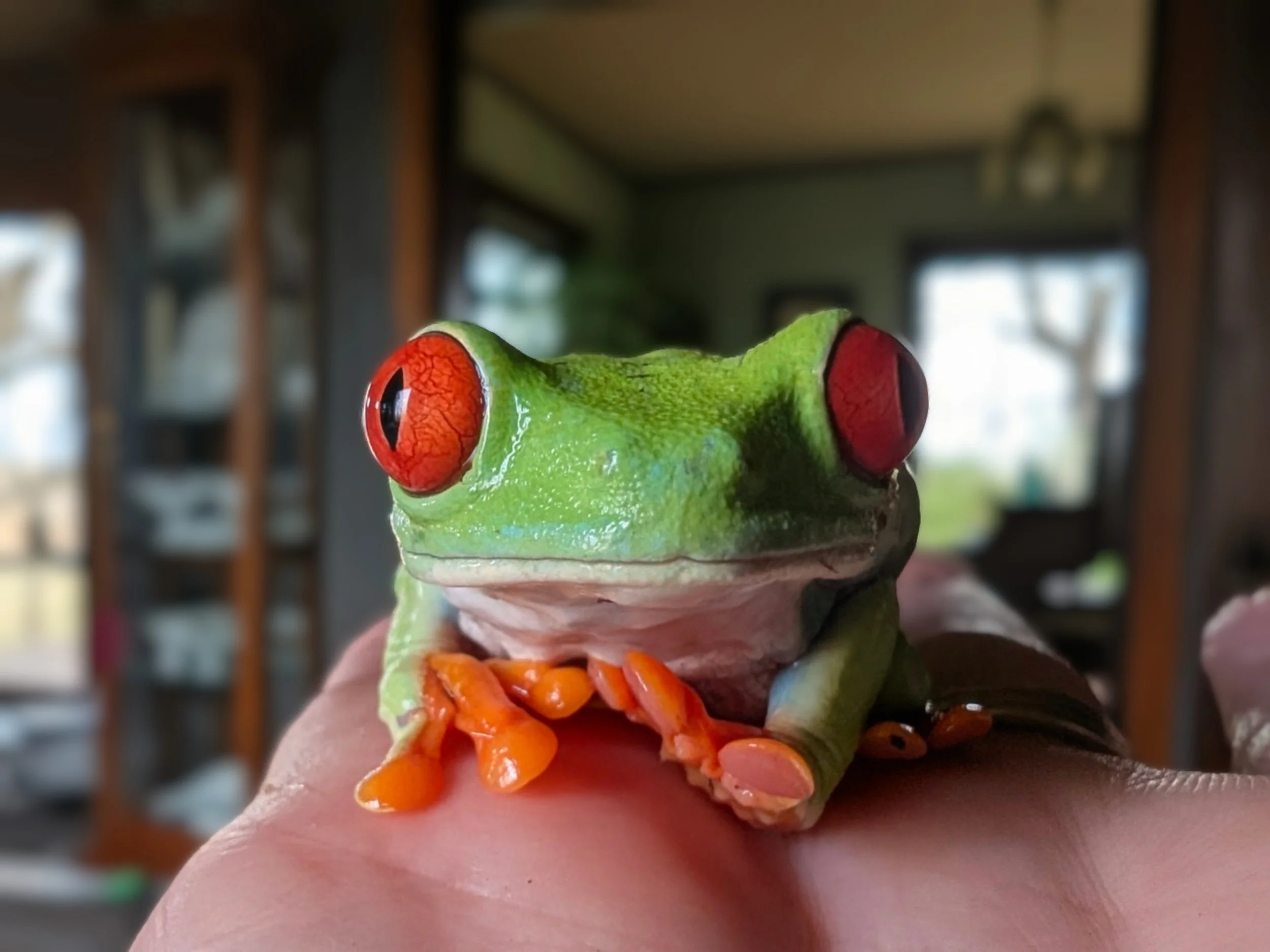
is one of the most famous frogs in the world. It’s known for its bright red eyes, neon green body, and colorful blue and yellow sides. These frogs live in the tropical rainforests of Central America and are often used as a symbol of rainforest wildlife.
Basic Facts
Scientific name: Agalychnis callidryas
Size: about 2–3 inches (5–7 cm) long
Habitat: tropical rainforests near ponds and slow water
Range: southern Mexico through Central America to northern South America
Diet: insects like crickets, moths, flies, and sometimes small frogs
Amazing Adaptations
1. Bright Warning Colors
Their bright colors help startle predators. When resting, they close their eyes and tuck their colorful legs in, blending in with leaves. If disturbed, they suddenly open their red eyes and flash their colors, which can surprise predators long enough for them to escape.
2. Sticky Toe Pads
Like many tree frogs, they have large sticky toe pads that act like suction cups. This helps them climb leaves, branches, and even smooth surfaces.
3. Excellent Jumpers
Red-eyed tree frogs have long powerful legs that allow them to jump far between branches.
Life Cycle
These frogs reproduce in a very interesting way:
A female lays eggs on leaves above water.
When the eggs hatch, tadpoles drop into the water below.
Tadpoles grow in the water before becoming small frogs.
Scientists discovered the embryos can even hatch early if they sense danger, like a snake attacking the eggs.
Behavior
Nocturnal – active at night
Spend days sleeping on leaves
Males call to attract females during rainy nights
Good climbers but not strong swimmers as adults
Conservation
Red-eyed tree frogs are currently listed as least concern, but they still face threats such as:
Rainforest habitat loss
Pollution
Climate change
Protecting rainforests helps protect many species like them.
Fun Fact
When sleeping during the day, red-eyed tree frogs flatten their bodies against leaves and pull their legs in, hiding their bright colors so they look almost completely green.