
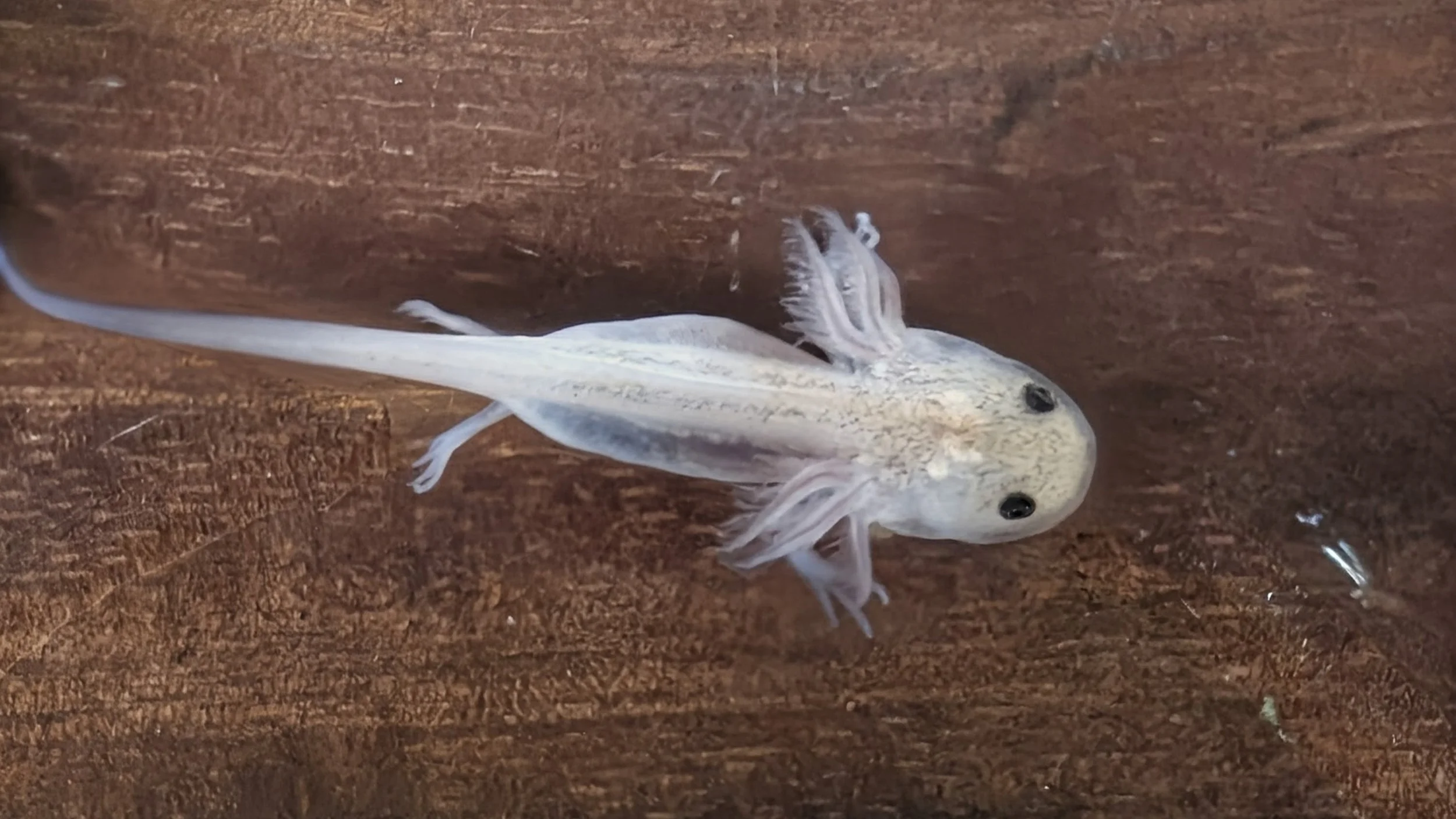
🦎 Axolotls (Mexican Walking Fish)
Axolotls are one of the most fascinating amphibians in the world—and a favorite for education programs like yours. Here’s a clear, science-accurate overview you can use for talks, handouts, or quick explanations.
What is an Axolotl?
The Axolotl is a neotenic salamander, meaning it keeps its juvenile traits (like external gills) for its entire life instead of metamorphosing into a land animal.
Where Are They From?
Native only to Lake Xochimilco
Critically endangered in the wild due to habitat loss, pollution, and invasive fish
Key Features
🌸 External feathery gills
🧬 Incredible regeneration (can regrow limbs, spinal cord, parts of the heart and brain)
🐟 Fully aquatic for life
😮 Permanently “smiling” appearance
Axolotl Colors (Morphs)
Wild type (dark with speckles)
Leucistic (pink with black eyes)
Albino / Golden albino
Melanoid
Copper
(Color morphs are from captive breeding, not wild populations)
Diet
Earthworms (best staple)
Soft sinking carnivore pellets
Blackworms, bloodworms (treats)
Small aquatic invertebrates
Basic Care Snapshot (Adult)
Temperature: 60–68°F (cool water is critical)
Tank: 20+ gallons per adult
Substrate: Bare bottom or large smooth stones (no gravel!)
Water: Clean, cycled, low flow
Lighting: Low
Fun Educational Facts
Axolotls can regrow a leg over and over again
They breathe through gills, skin, and lungs
Their name comes from an Aztec god
They are not fish—they’re amphibians!
Conservation Message
Axolotls are:
❌ Almost extinct in the wild
✅ Thriving in captive breeding programs
🔬 Important for medical and regeneration research