
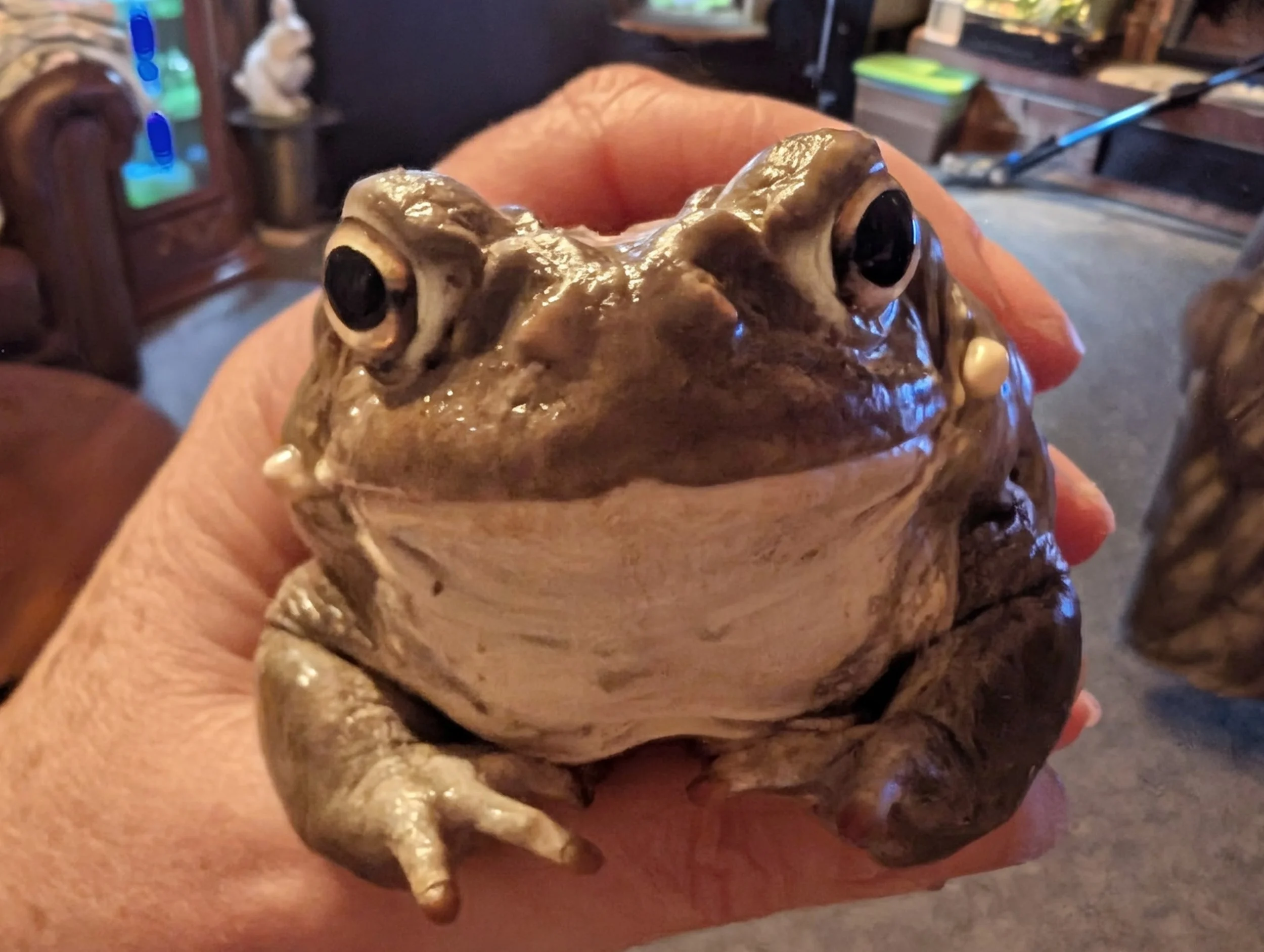
Sonoran Desert Toad (Colorado River Toad)
The Sonoran Desert Toad (Incilius alvarius) is the largest native toad in the United States and one of the most iconic amphibians of the Southwest. They’re bold, chunky, and perfectly adapted to extreme desert life.
🌵 Where They Live
Range: Southern Arizona, southwestern New Mexico, and northwestern Mexico
Habitat: Desert lowlands, grasslands, agricultural canals, washes
Key factor: Summer monsoon rains—they spend much of the year underground
During dry months, they estivate (a form of hibernation) in burrows, emerging dramatically after heavy rains.
🐸 Size & Appearance
Length: 6–7.5 inches (sometimes larger!)
Color: Olive, gray, or brown with smooth, rubbery skin
Distinctive feature: Massive parotoid glands behind the eyes (toxin glands)
Eyes: Golden with horizontal pupils
They often look more like living footballs than toads 😄
🦗 Diet
Insects (beetles, roaches)
Small rodents
Lizards
Other amphibians
They’re opportunistic ambush predators—if it moves and fits, it’s fair game.
💧 Breeding Behavior
Breeding is triggered by monsoon rains
Males call from temporary pools, ditches, and flooded areas
Females lay long strings of eggs
Tadpoles develop very quickly to beat drying water
☠️ Defense & Toxins (Important!)
Sonoran Desert Toads secrete a powerful toxin from their parotoid glands containing:
Bufotoxins
5-MeO-DMT
⚠️ Key safety points:
Toxins can be fatal to dogs
Never allow pets to mouth or lick them
Human contact should be minimal; always wash hands
Collection or harassment is illegal in many areas
Because of this, they are not suitable pets and are protected wildlife in much of their range.
🧠 Fun & Fascinating Facts
Can absorb water directly through their skin and bladder
May gain 30% of their body weight after soaking
Live 10–15 years in the wild
Spend most of their lives unseen underground
🌍 Conservation Notes
Not currently endangered, but threatened by:
Habitat loss
Road mortality during monsoons
Illegal collection
They play an important role in controlling insect and rodent populations.