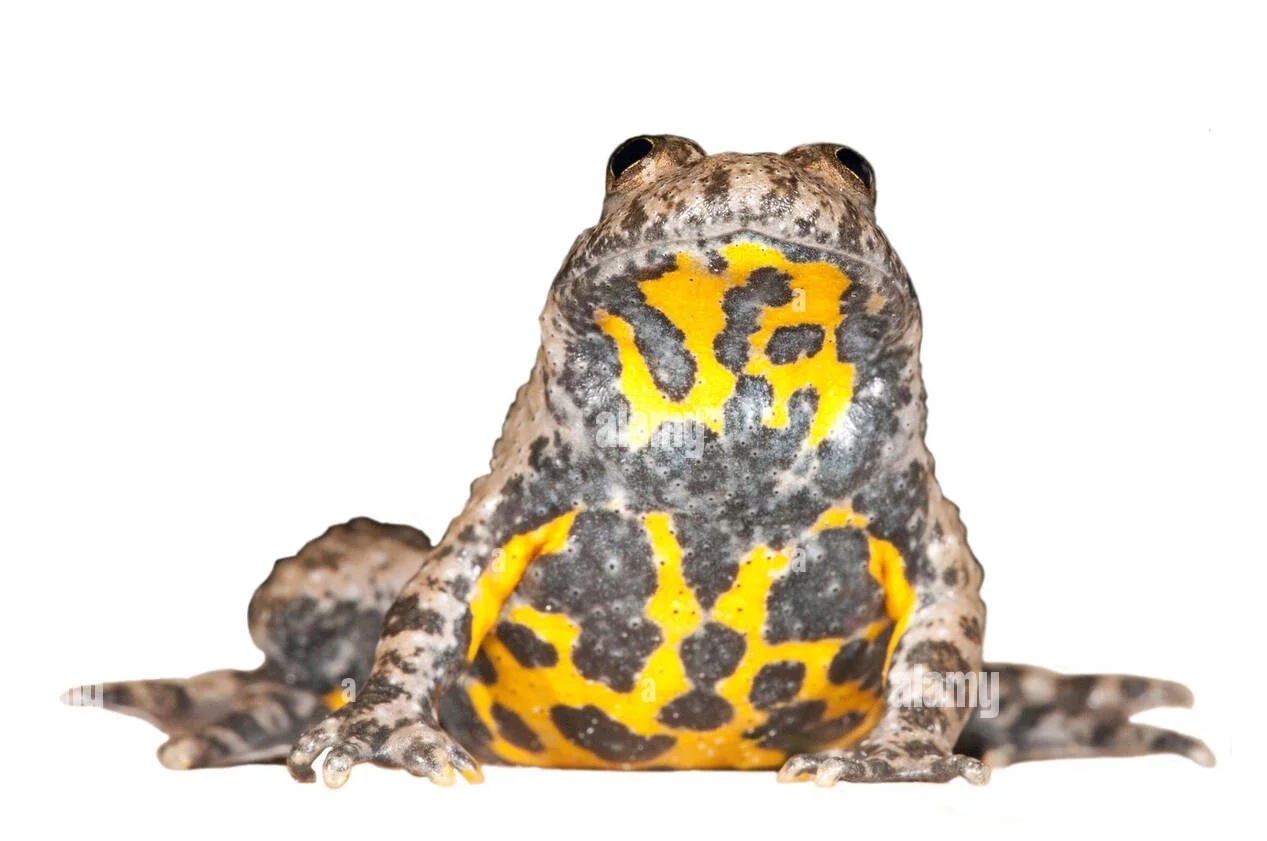
Yellow-bellied toads
Small, charismatic amphibians best known for their bright yellow-and-black bellies—a warning signal to predators. They belong to the genus Bombina, a group often called fire-bellied toads.
They favor shallow, temporary water like:
Rain-filled puddles
Wheel ruts on dirt roads
Small forest pools
This makes them surprisingly adaptable—but also vulnerable to habitat disturbance.
Their underside is a classic example of Aposematism:
Bright yellow with black blotches = “don’t eat me”
Skin secretes mild toxins (not dangerous to humans, but irritating)
When threatened, they perform the iconic unken reflex:
Arch their back
Flip limbs upward
Flash that warning belly
It’s basically amphibian theater with a purpose.
Length: 1.5–2 inches (3.5–5 cm)
Back: dull gray/brown/olive for camouflage
Belly: vivid yellow with irregular black patches
Skin: slightly warty, not smooth like many frogs
They’re opportunistic little hunters:
Insects (flies, beetles, ants)
Small aquatic invertebrates
Worms
They feed both in water and on land edges.
Breed in warm months (spring–summer)
Lay eggs in small clusters in shallow water
Tadpoles develop quickly—important since their pools can dry up
Many populations of Bombina variegata are declining due to:
Habitat loss (especially disappearance of temporary pools)
Pollution
Road development
In some regions, they’re considered near threatened or protected.
They’re more aquatic than typical toads, often floating at the surface
Their pupils are heart-shaped or triangular (a neat ID feature)
They don’t hop much—they kind of crawl or paddle